

AmpAI
Amperity
We tried to bootstrap Amperity from the cumbersome SaaS model into the Agentic era. We started work on this in 2024 and 2025, when GPT-4o was state of the art; long before claude code and claude cowork.
Act I: AI Segments
I have well over a decade of experience building really good segmentation tools, but I’ll be the first to say even the best ones have steep learning curves.
Our first big win with AI was allowing users to skip - and verify - the complex step of wrestling with these interfaces.
The Details
Amperity was a mature product with a lot of different approaches to design and feature areas. This needed to be a consistent reliable feature that behaved the same on each page it was added to.
A product inventory, roadmap, and requirements guided the way:
A right panel: was already used for “More details”
Floating bottom controls: looked like “Help”, were ignored, and implied that context would follow a user (impossible for us with the uneven coverage this feature would have)
A left panel: Only in use in a few instances and largely context free. Part of shipping this was redesigning products which used the left panel (including Journeys)
This new uniformity allowed us to add page-level assistants to Journey creation and Queries.
Results
15 successful early access customers; more than doubling in both count of active segments and segment complexity.
AI Segments gave us the confidence the our marketers will still be successful as we move off our legacy CDP.
Sr. Manager, Marketing Analytics & Data Engineering, Nestle
Act II: a jigsaw puzzle
I used to describe Amperity as a jigsaw puzzle, but you don’t know what the final art will be and there’s no edge pieces.
Journeys were a step forward, but it never quite solved the underlying architectural and technical mess. Everything always felt like a delicate baking recipe: ingest the data, define semantic tags, labels & attributes, then you can build a segment, then build the journey - which itself only pointed to a set of other elements.
It’s no wonder a lot of our customers relied on our implementation team.
Prototyping a path forward
“Design the future of activations at Amperity”
With that mandate, I ran a 3-day design and prototyping workshop. We all used our AI prototyping tools of choice to craft our vision of the future of AI at Amperity, and by the end we had several rough prototypes, and one high fidelity smoke and mirrors complete walkthrough that we could shop around.
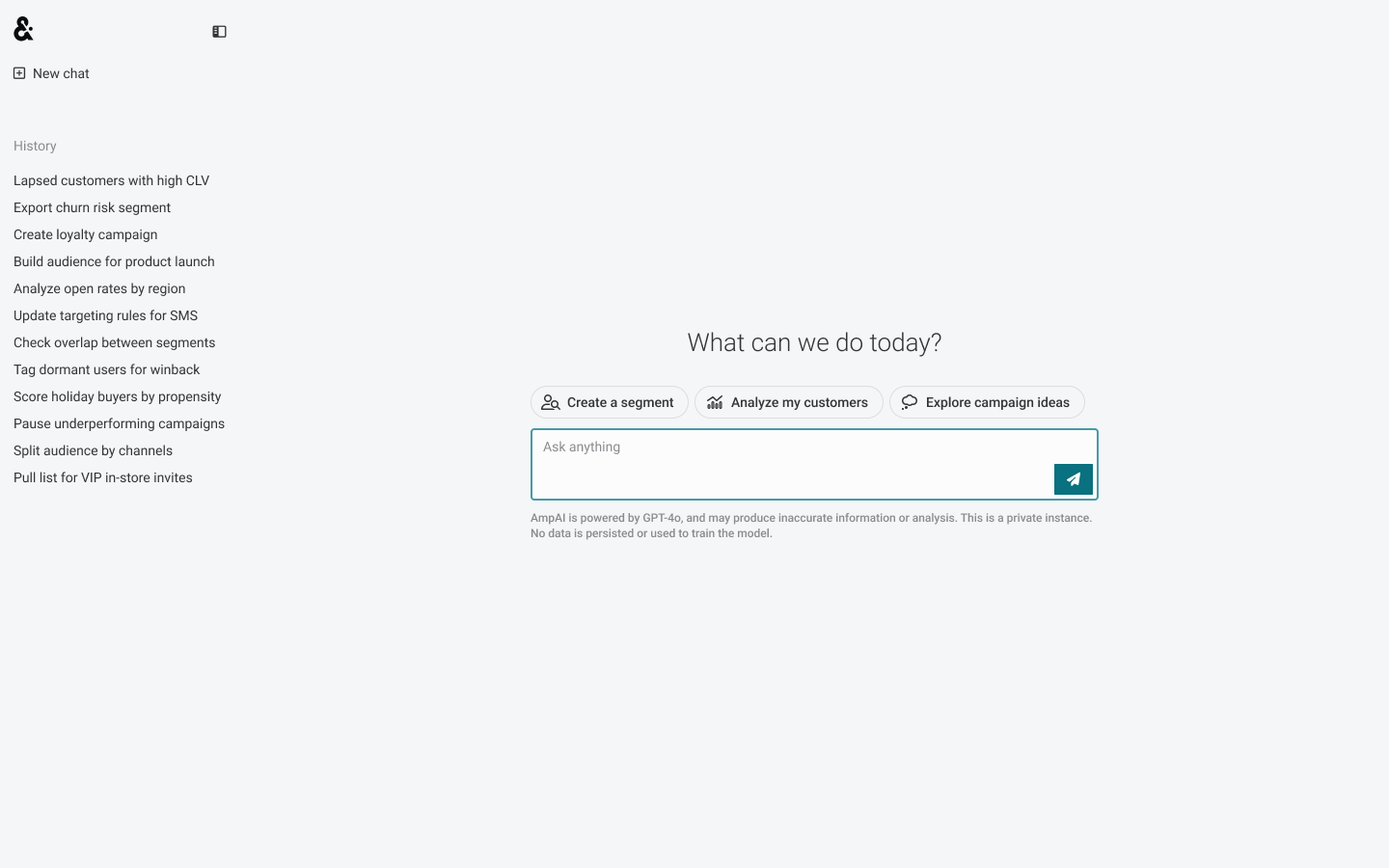
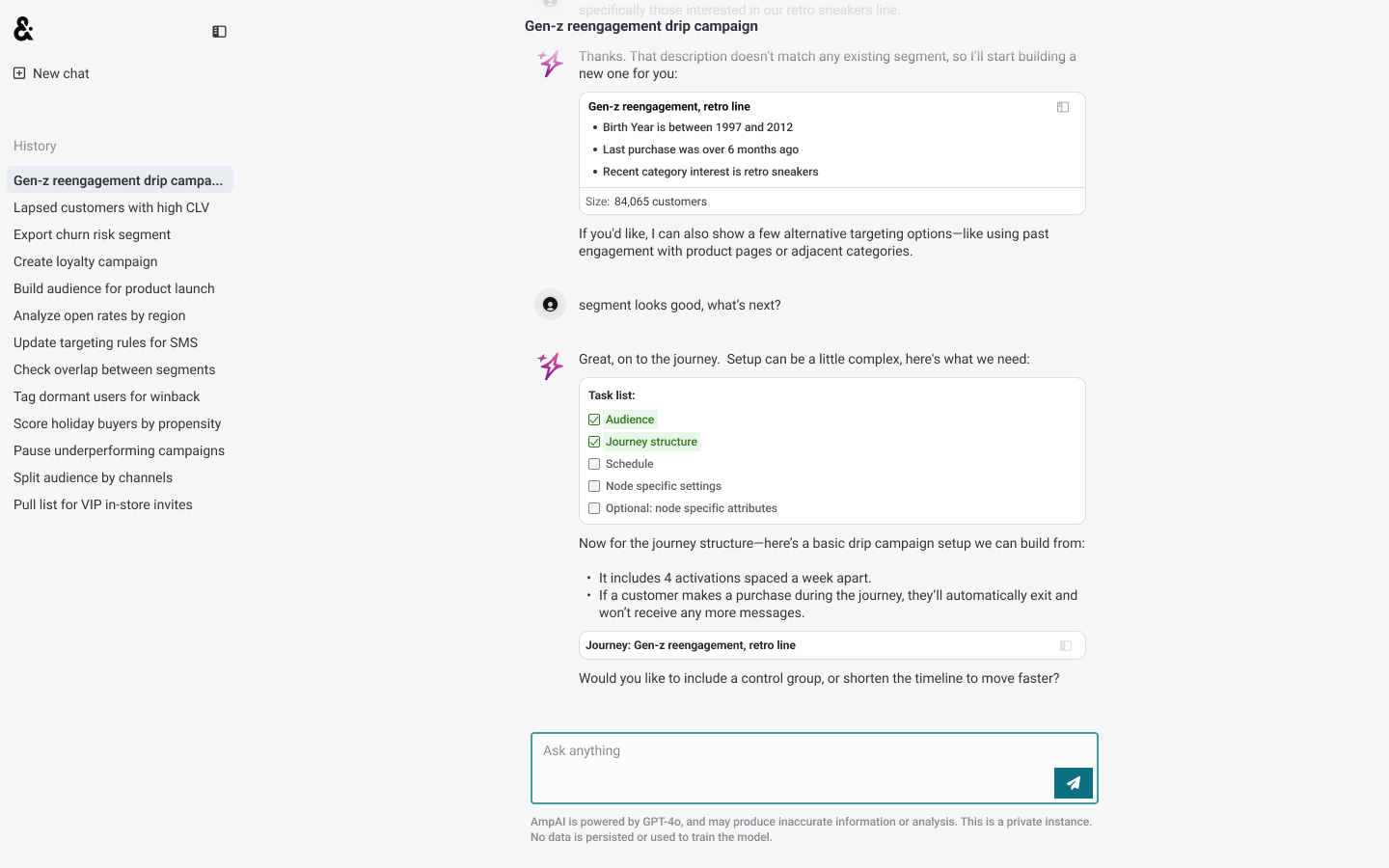
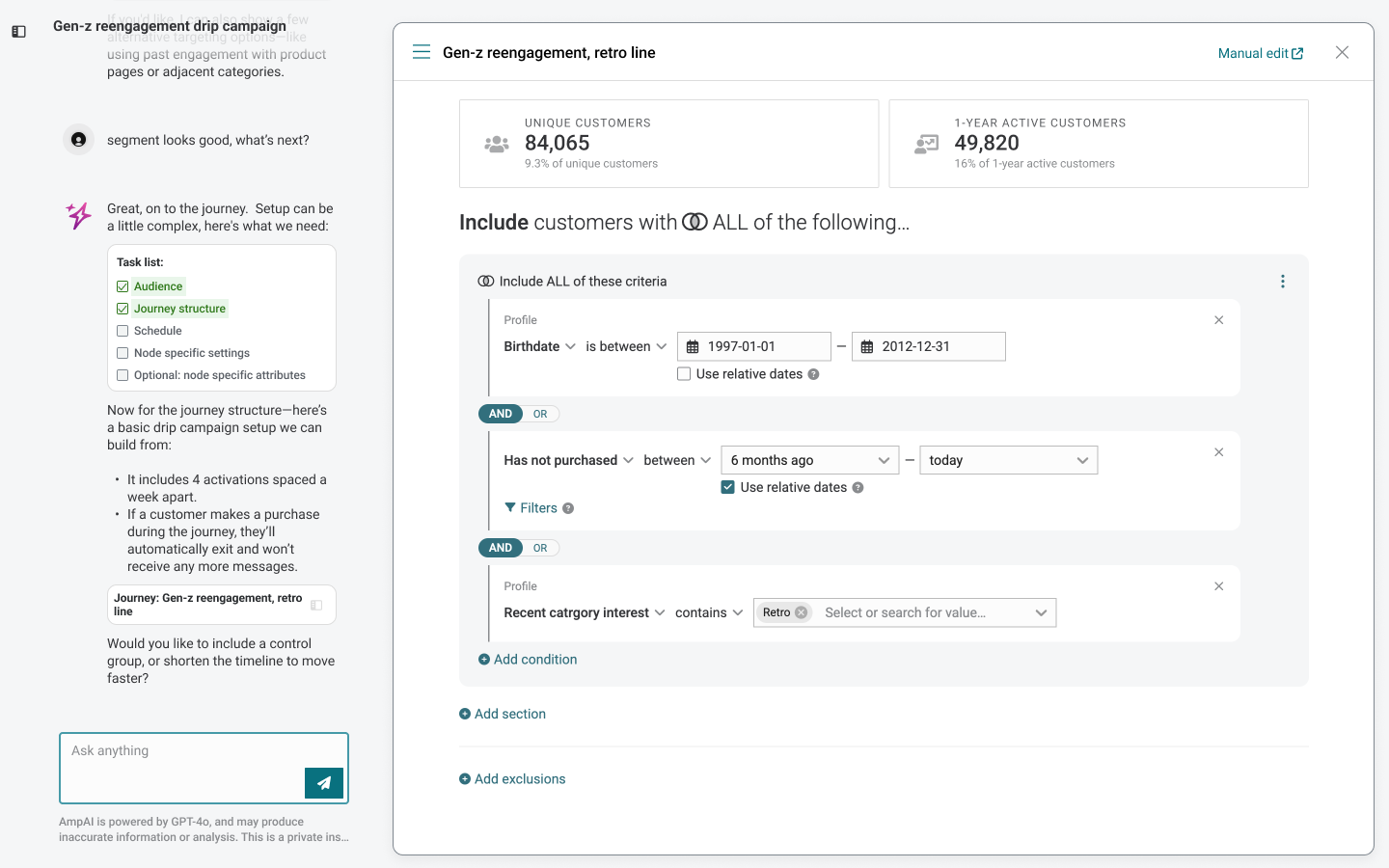
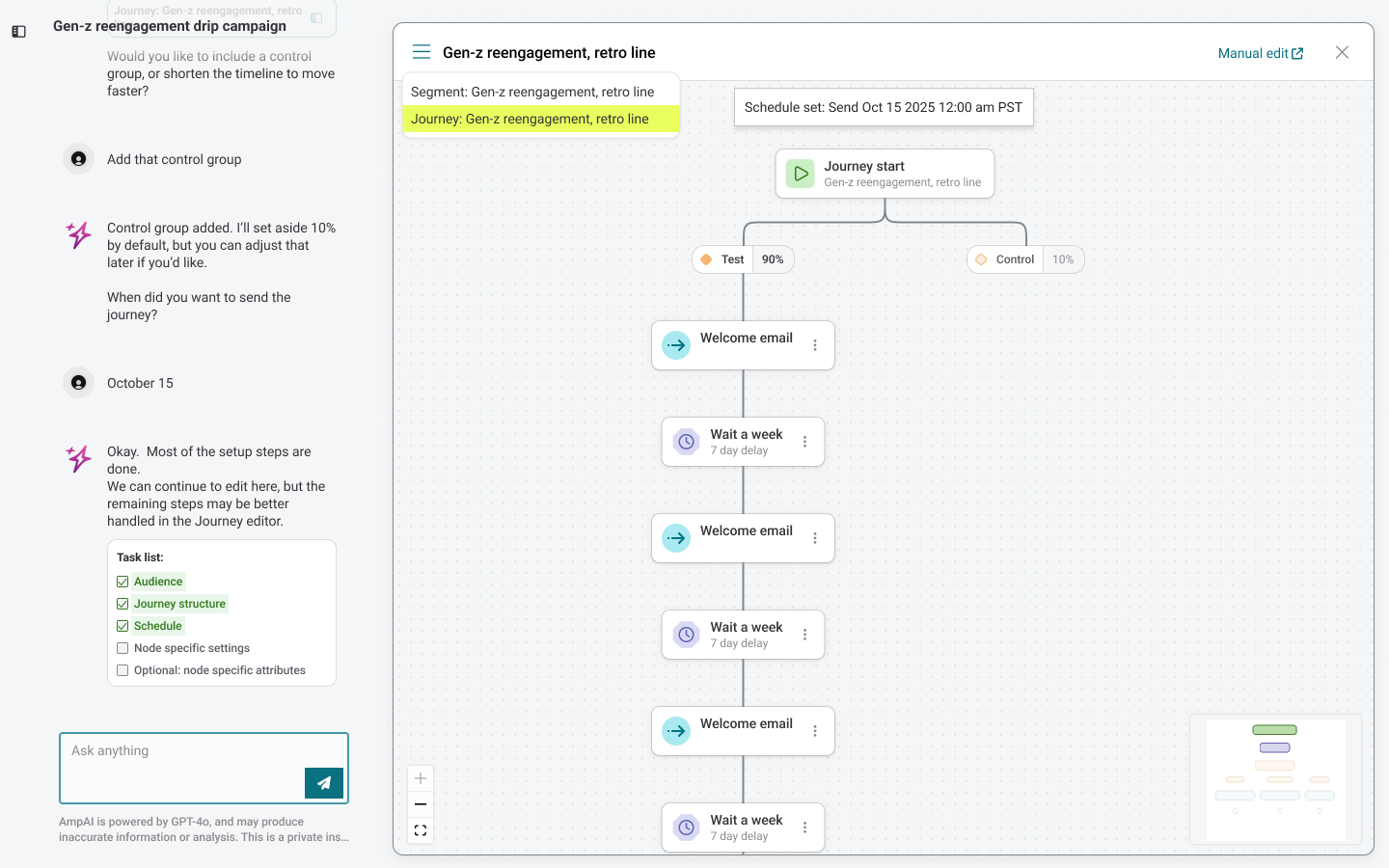
The goal: Hand responsibility for the chain of dependencies off to the agent, and build entire campaigns - start to finish - based on a desired outcome.
Design was ahead of product on this, but we couldn’t get ahead of reality. Every step of these prototypes was worked through with engineering SMEs.
Versions of this prototype circulated amongst the leadership, and they made AI the newest core pillar of our company. With buy-in, we gained a dedicated product manager, immediately grew to 5 SWEs, and I remained the sole product designer focused on AI.
AmpAI
Now, we had to make this prototype a reality.
Amperity had all of the main elements and a library of mar-tech best practices to make this happen. To overcome the hallucinations of 2025-era agents, we built a strong library of examples that could be modified by the agent.
A central part of our value proposition - the agent would handle Connectors, Attributes, Segments, Queries, Campaigns, Journeys etc - in a way that made sense to the user. But agent UI at this time was not yet built to surface multiple artifacts in an effective way. Without prescient to draw upon, I built an artifact selector into the preview. This surfaced a simple, lightweight editing experience for artifacts, while letting users go directly to the object for more advanced editing.
Outcomes
Qualitative feedback was strong from our pre-release customers. Customers using AmpAI were able to reduce their reliance on our Implementation Team (a cost center depending on the contracts) by replacing portions of their workflow and reporting with AmpAI.
Unfortunately, a major reorg and loss of our AI product lead slowed the project dramatically. As of the time that I left, AmpAI was generally available but missing a few of the key puzzle pieces that would let it complete a full agentic workflow.