Design system
surveygizmo
Over the course of the previous decade, surveygizmo released 4 major versions of their software. These versions were all major overhauls designed around their understanding of the customer base at that time. I have worked on Versions 3, and 4, and now my team and myself were taking on the transition to version 5.
Versions 1-4
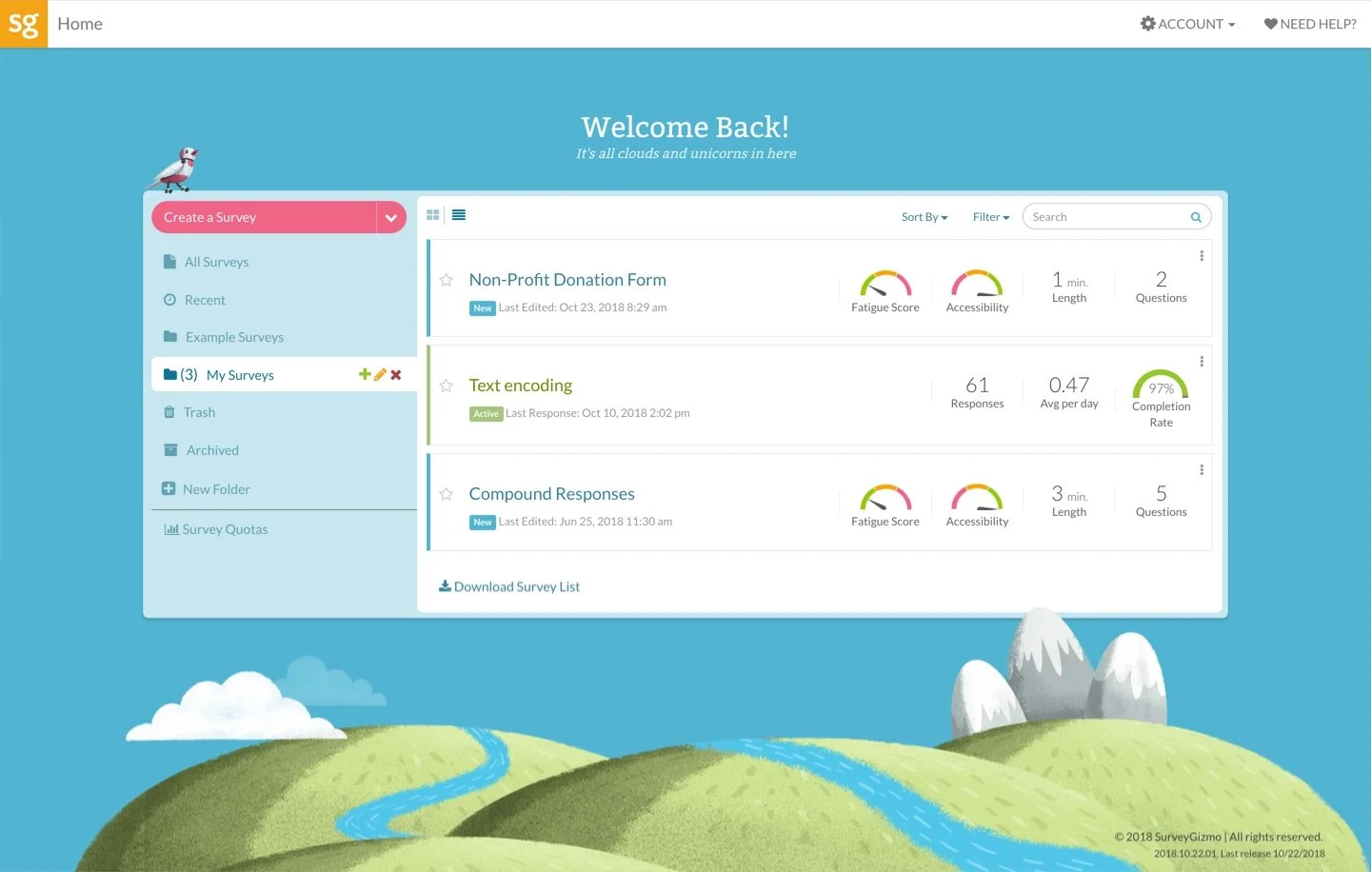
Surveygizmo version 4 was in need of a serious facelift
Over the life of Version 4, our revenue and focus began to shift from small business customers to larger, more diverse, enterprise teams.
Our product had not adapted with the times.
Sales was having trouble selling into the largest of customers
Users would resist growing their team
New users would require training and avoid exploration for fear of breaking something
SurveyGizmo became harder to use and find information in it the larger it got.
Finally, our brand was painfully out of sync with customer expectations
4.5: A coat of paint
The design team worked with sales to find areas where the sales process was failing. The unprofessional branding was causing an issue for internal advocates attempting to convince other members of their organization to take us seriously.
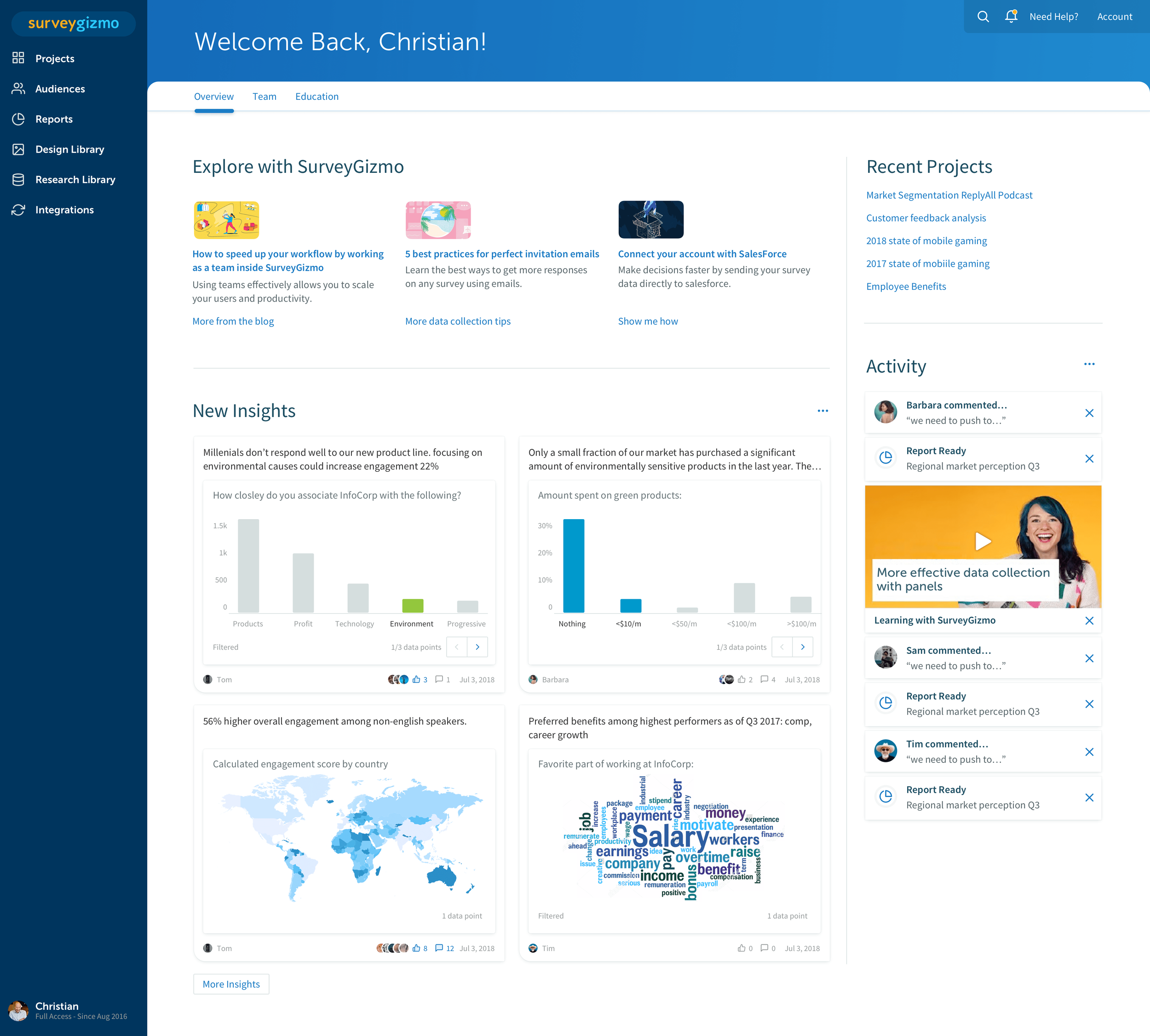
Our first pass at fixing this was a coat of paint, with a quick turnaround. We swapped out inconsistent sloppy design and robot illustrations for a more traditional SaaS styling. We focused our work on primary customer paths and key screens that sales would show off.
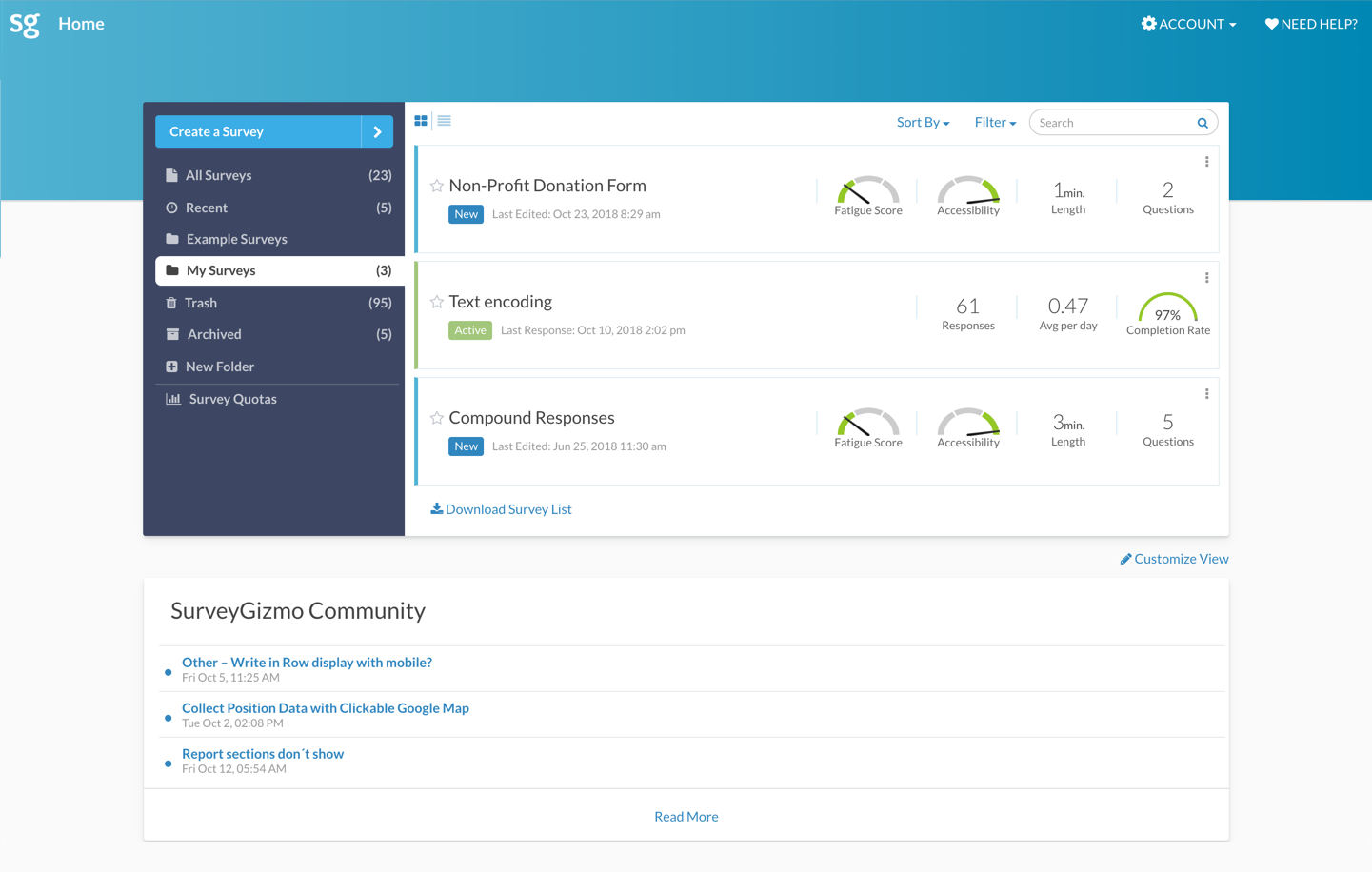
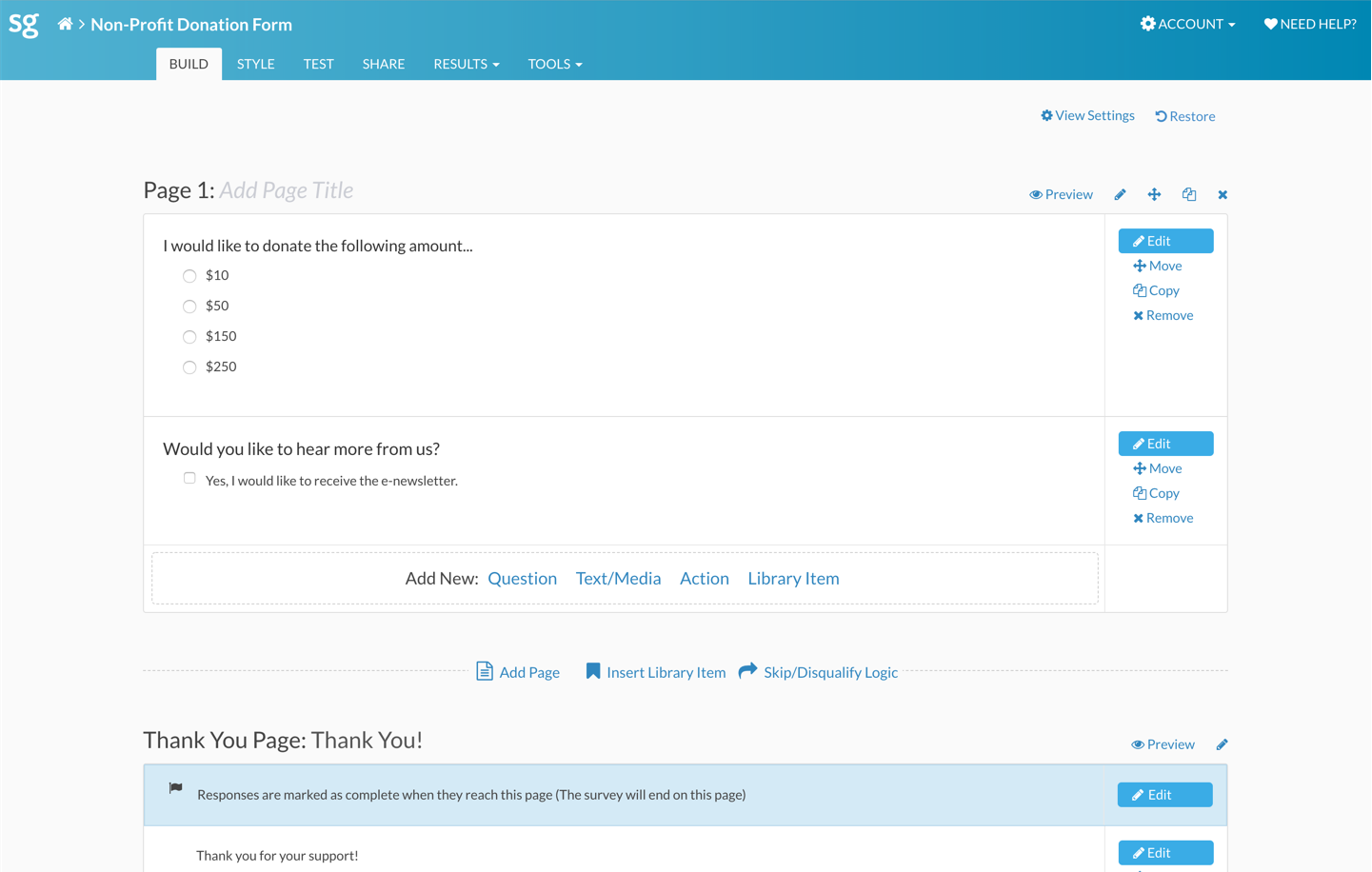
The results were dramatic.
Sales success indicators saw huge jumps. Average deal size began a steady trend up.
The modern theme ultimately served as a jumping off point to our most ambitious project yet: a whole new IA and design system
Researching Ascent
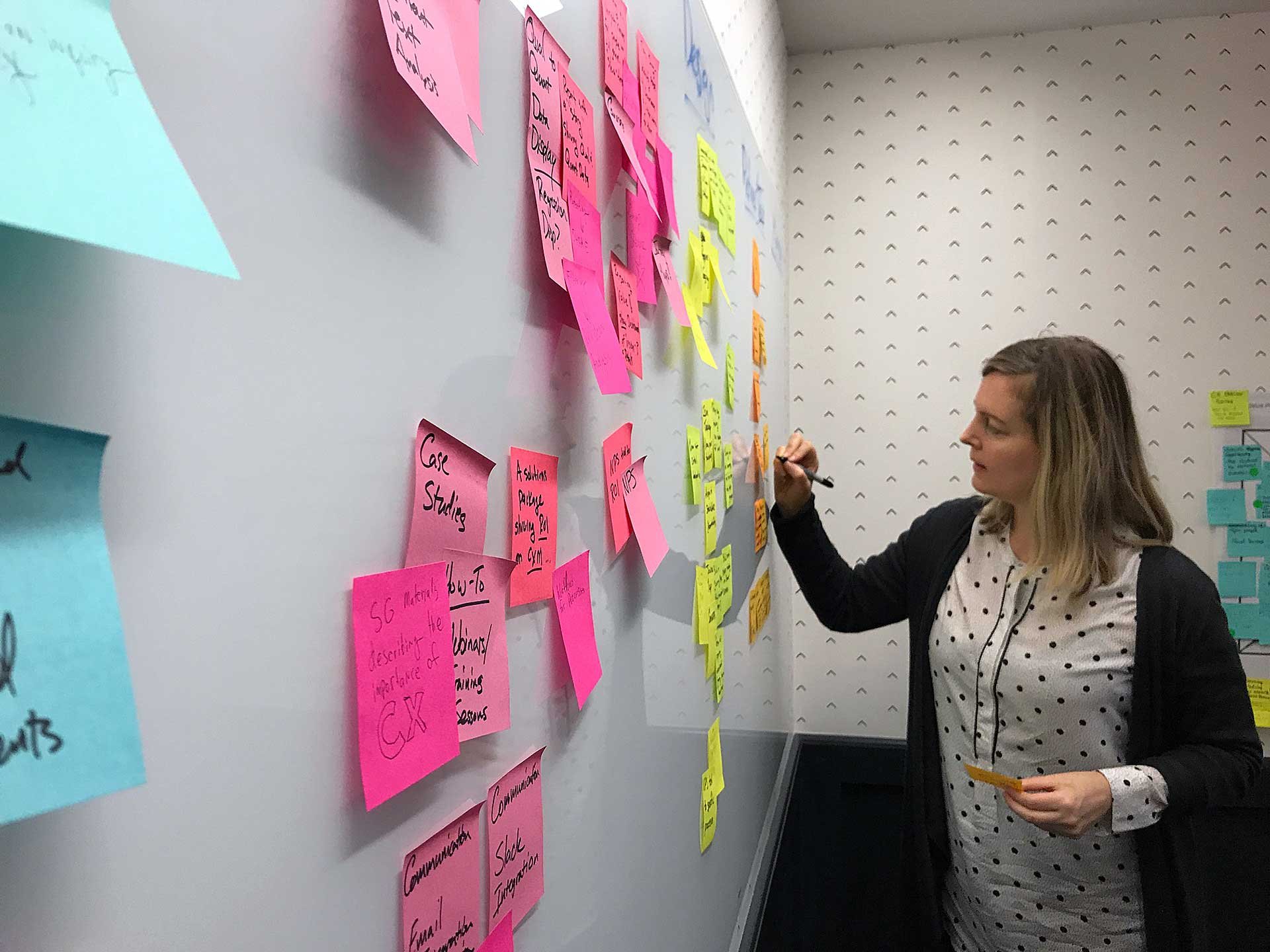
After the success of the Modern Theme, my team kicked off a research project to better understand our enterprise customers sales funnel, customer journeys, and demographics. We discovered:
Diverse job types.
We found at least 15 primary types of users all with different skills; everything from event planning, to warehouse inventory management, to project revenue planning.Not all users are "survey builders".
Under half of newer users would be involved in "building a survey" - a large gap from our historical single-user user base.They only know their narrow slice of the application.
New features were often unknown, which could lead to retention issues and frustration.Our Survey/Project based IA causes problems in large teams.
Lost users, zombie surveys, forgotten reports and unclear hierarchy - this was arguably the cause of many of our other issues, including the ones listed above.
We weren't serving our enterprise users needs, and this was limiting our ability to grow.
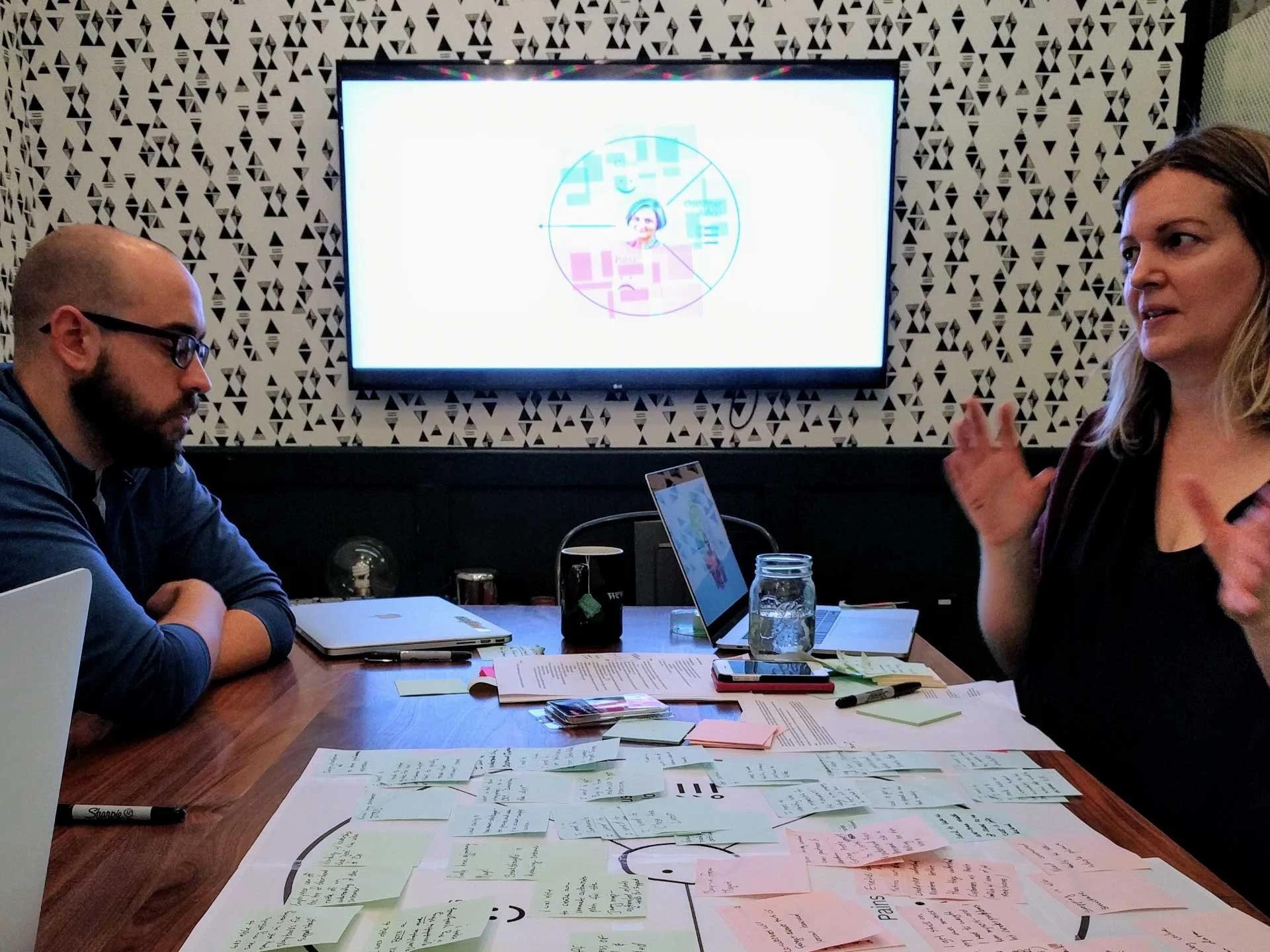
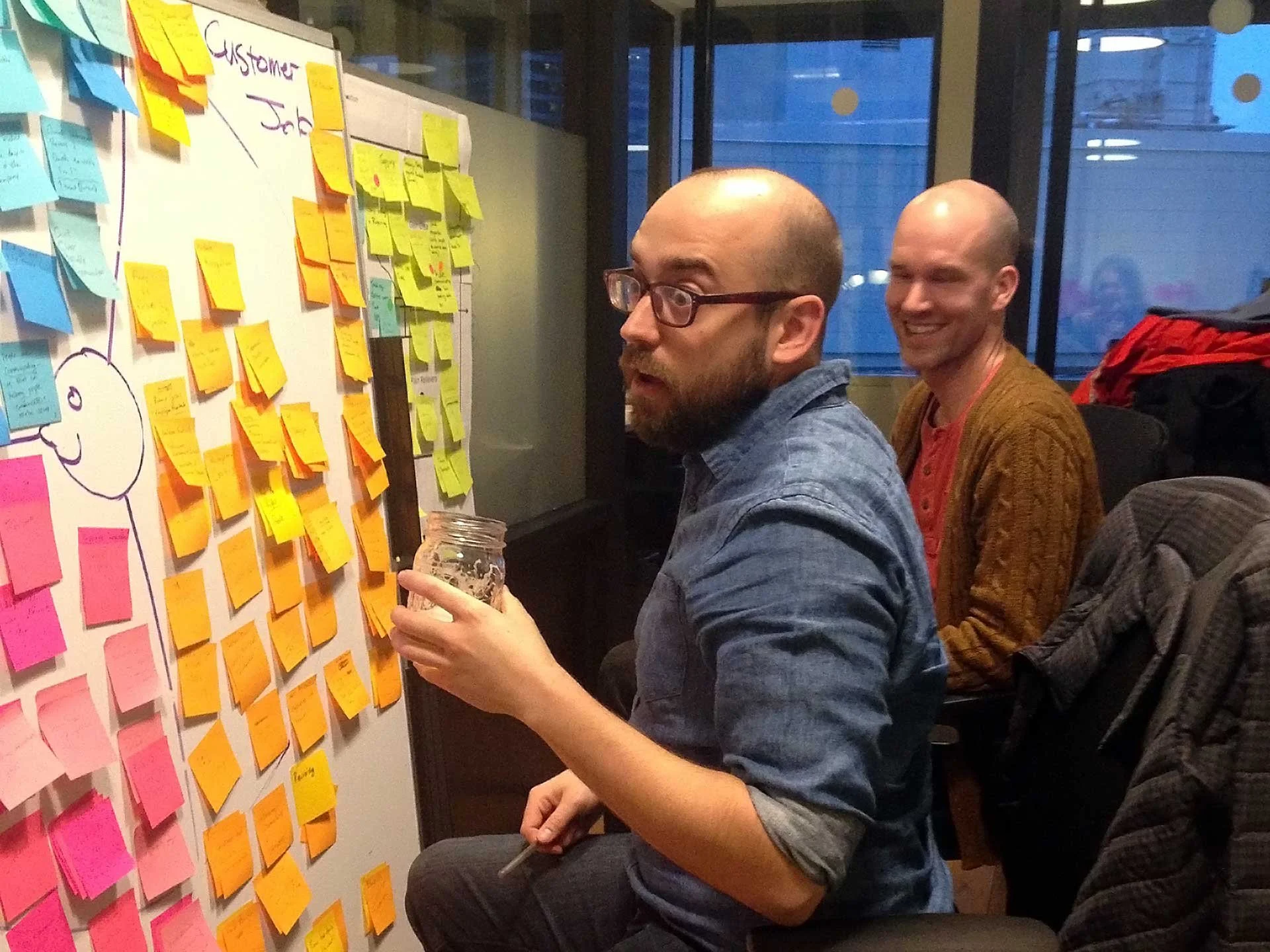
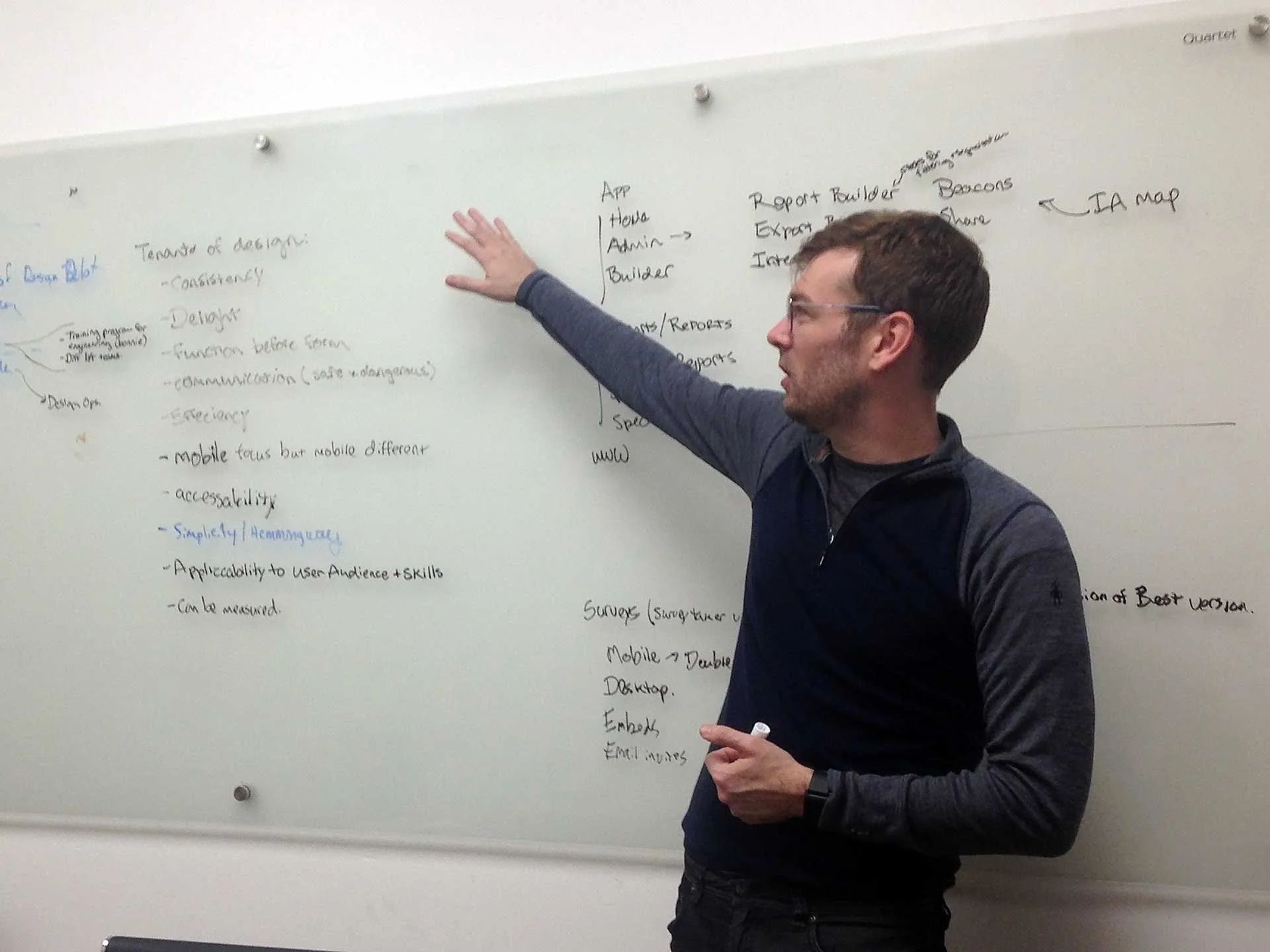
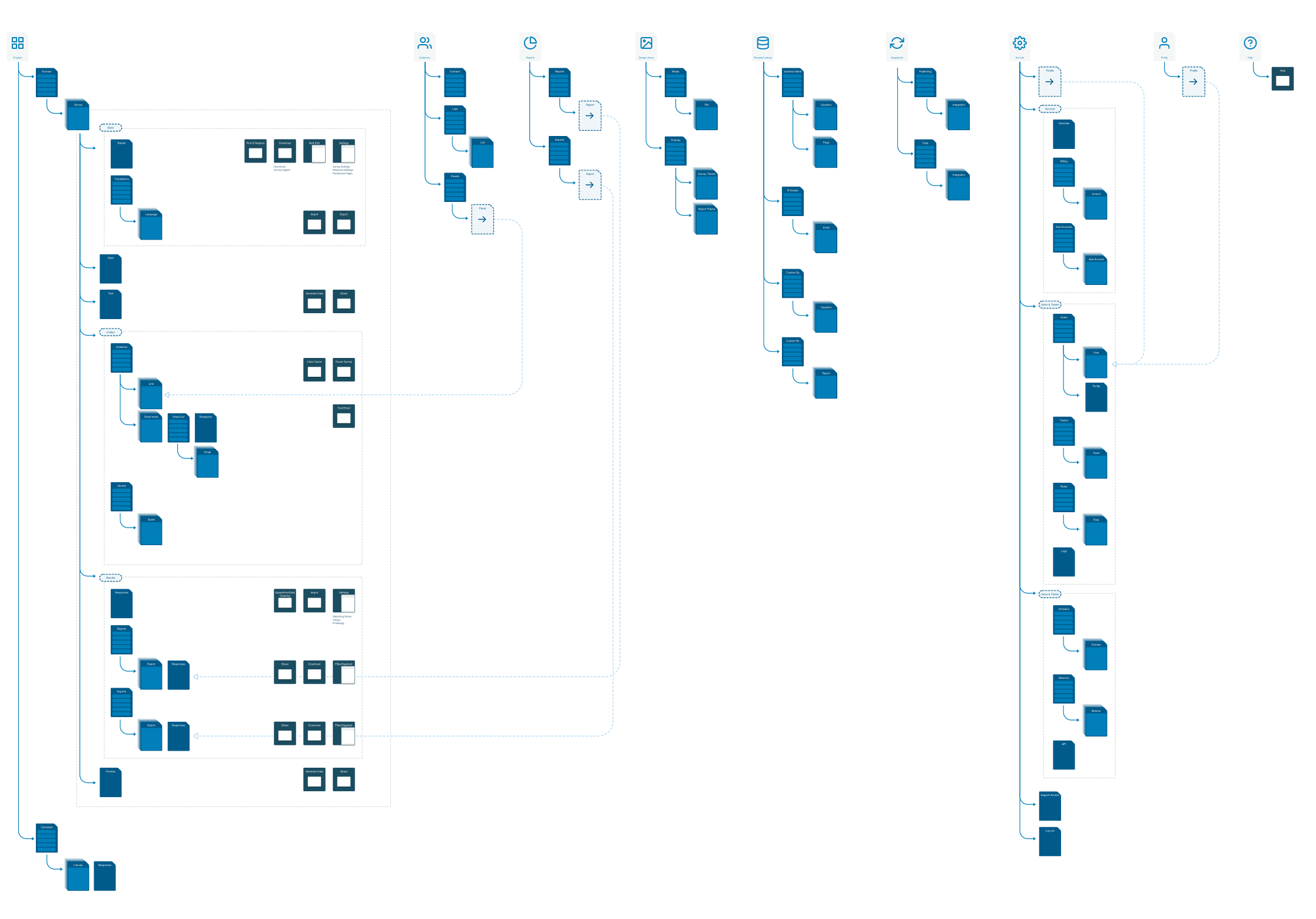
Designing Ascent
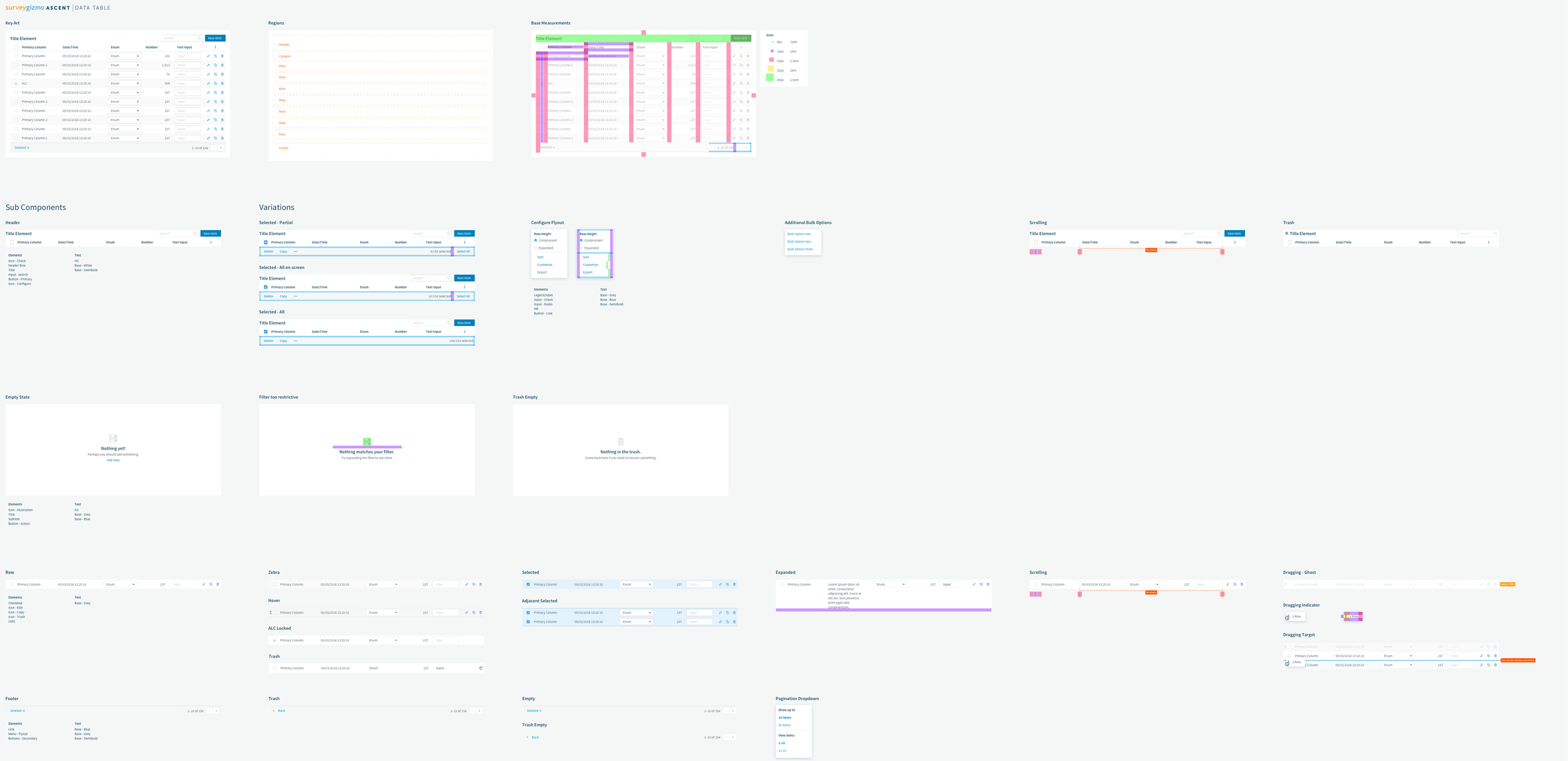
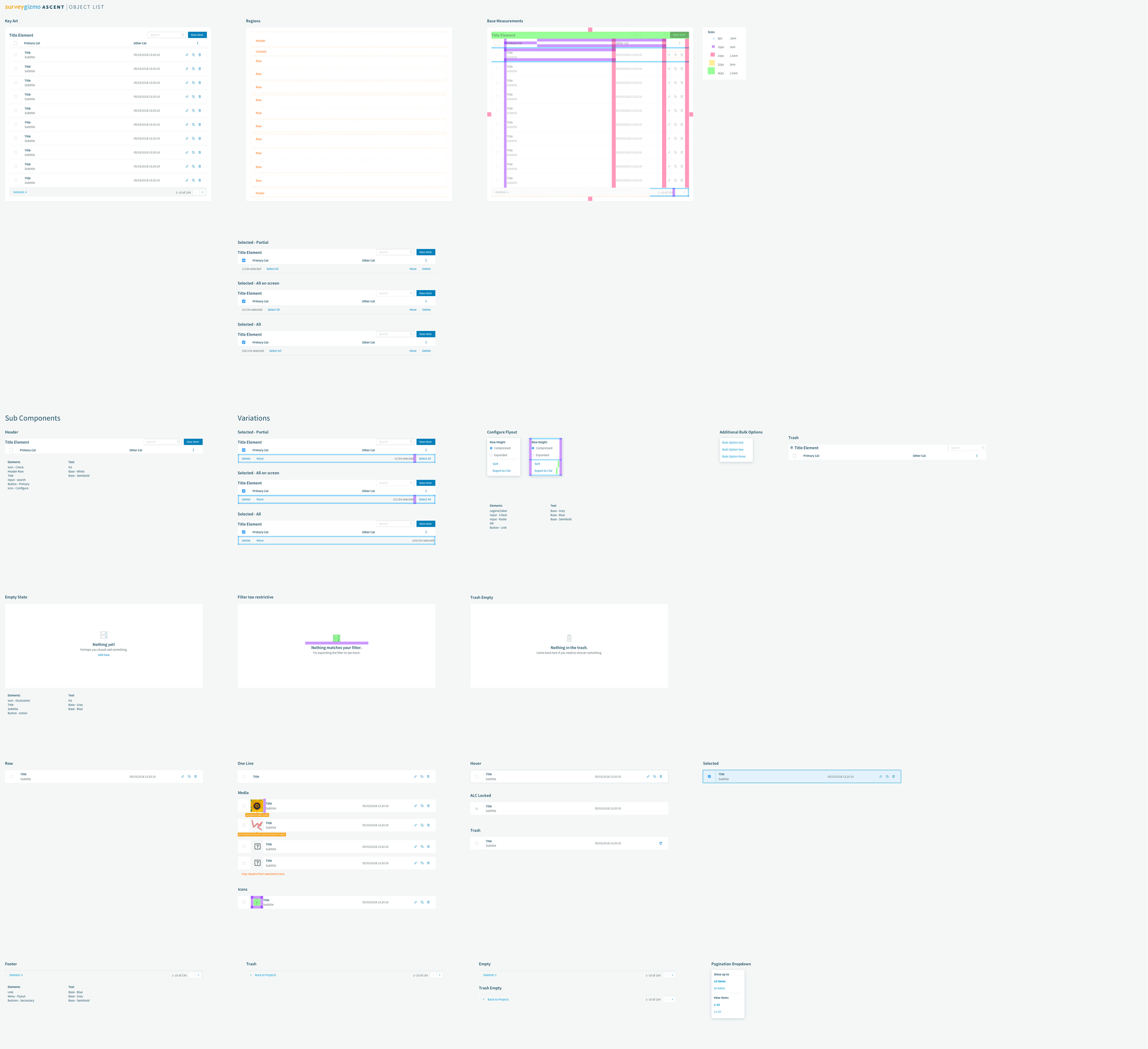
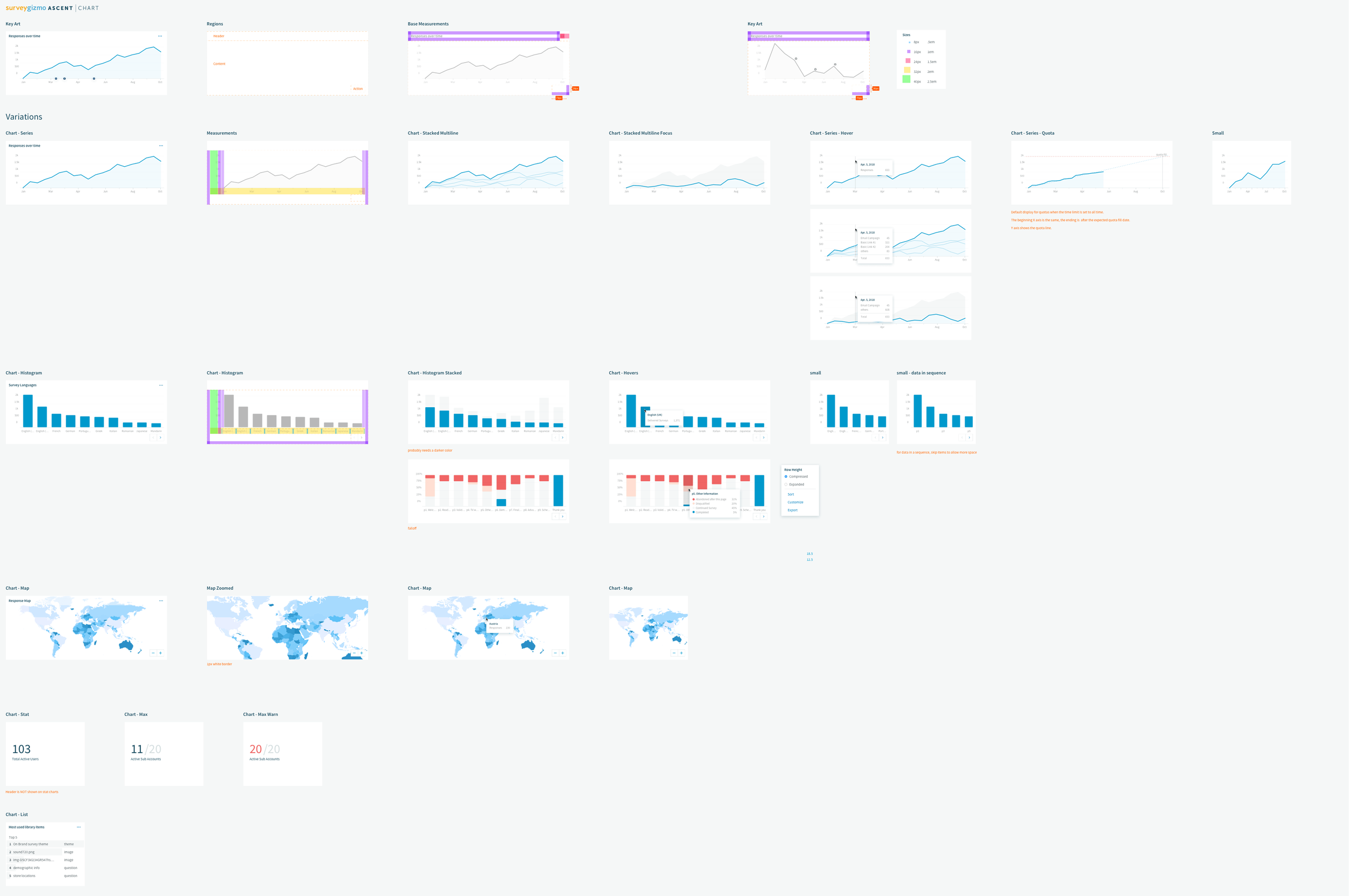
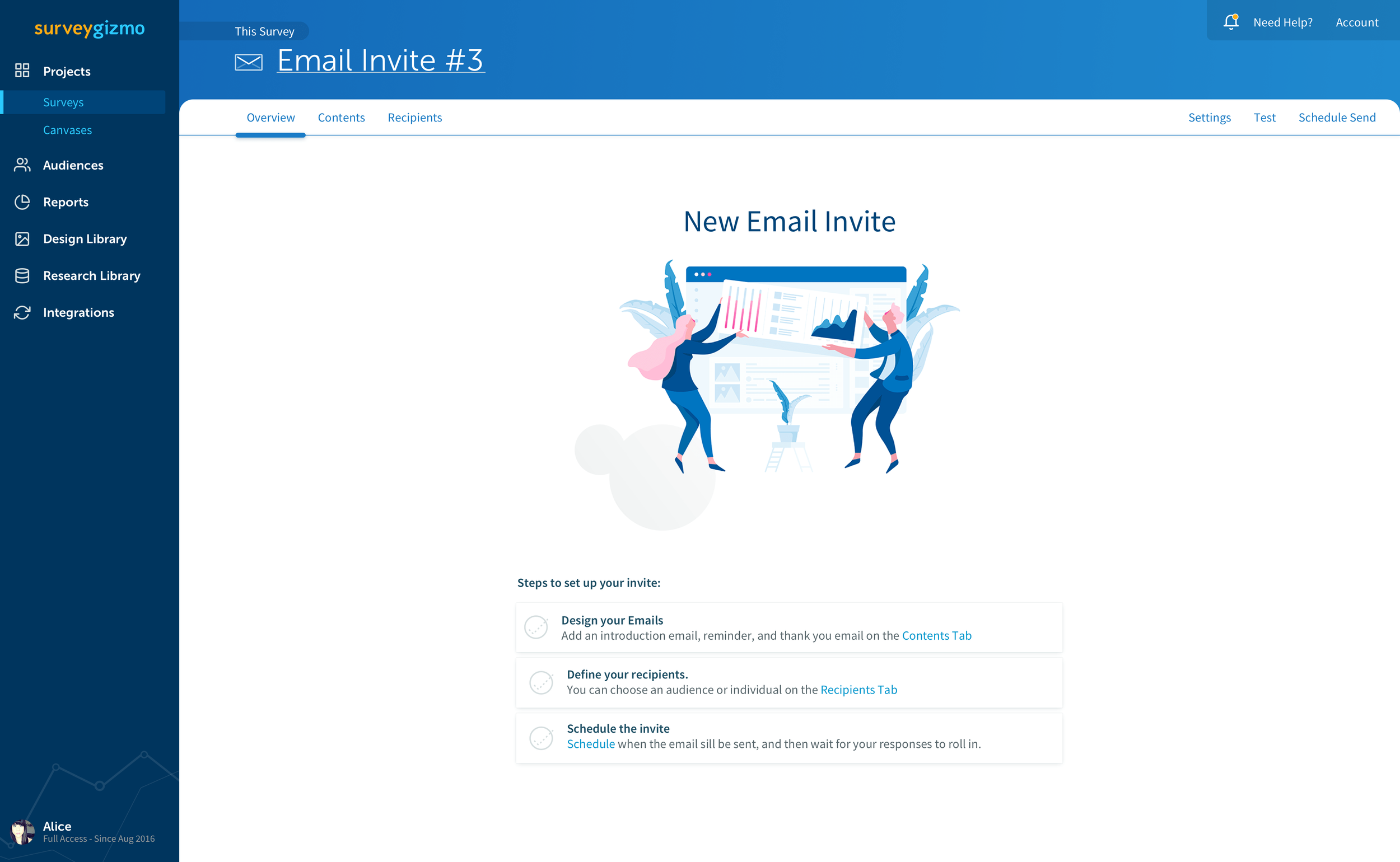
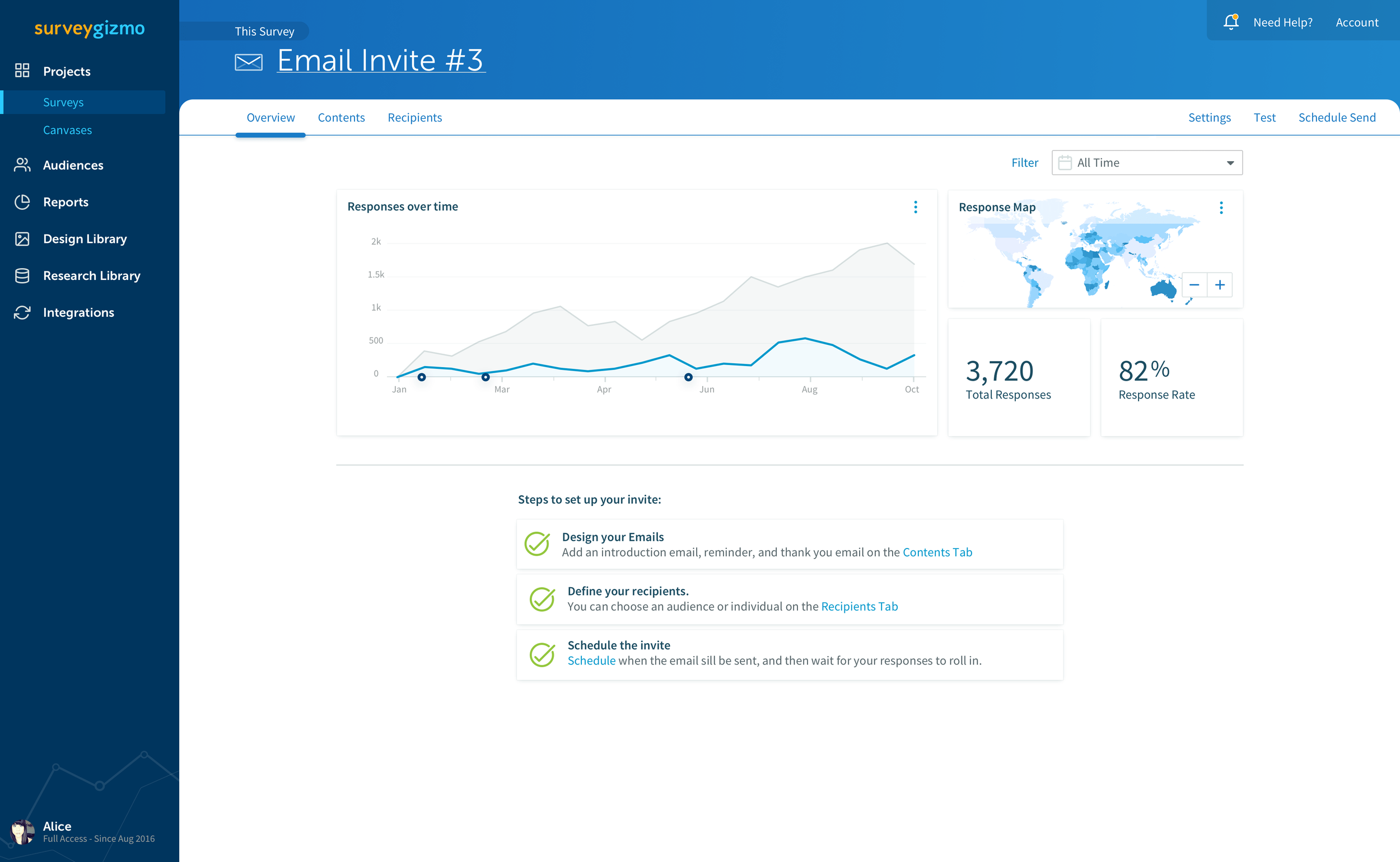
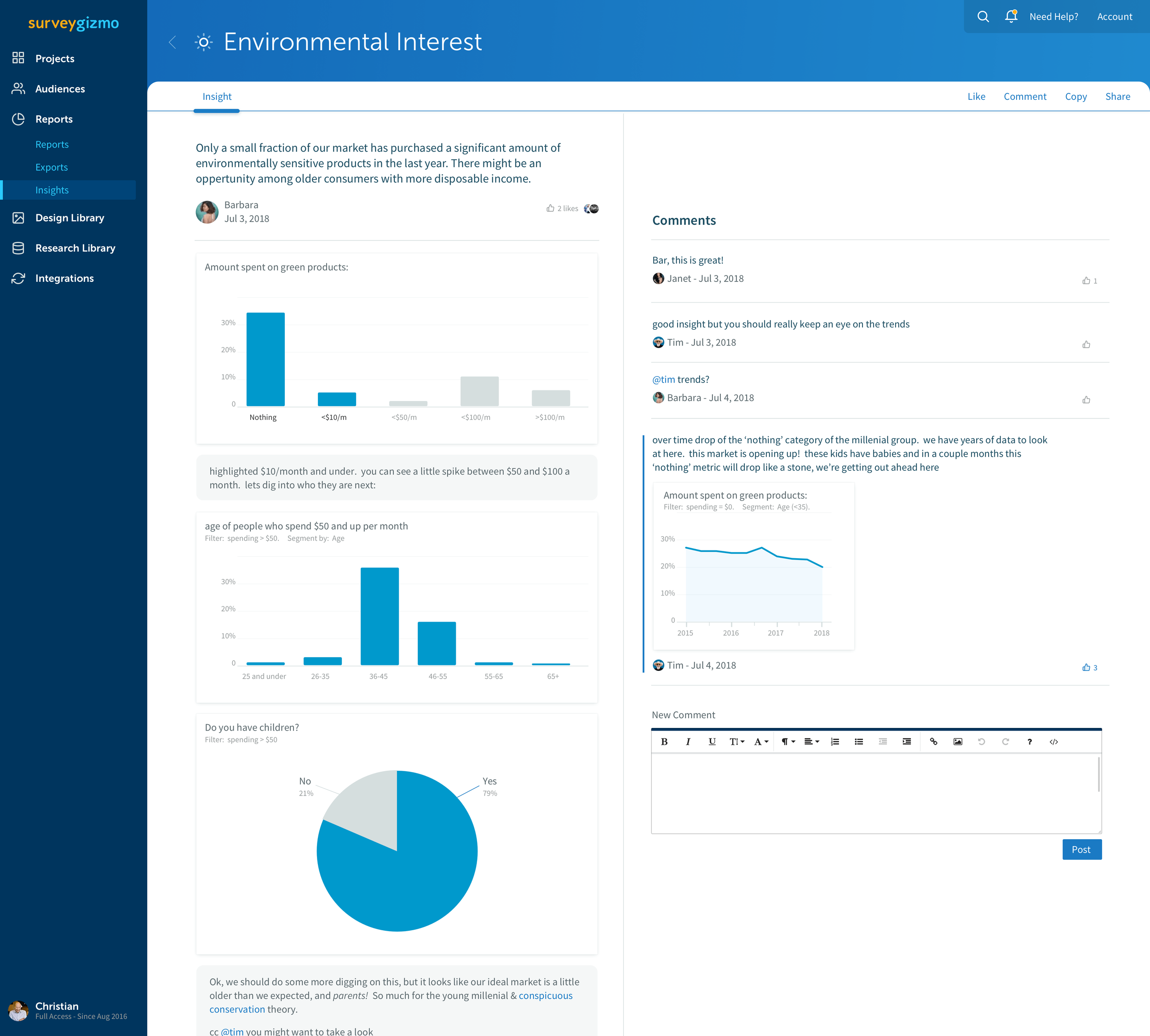
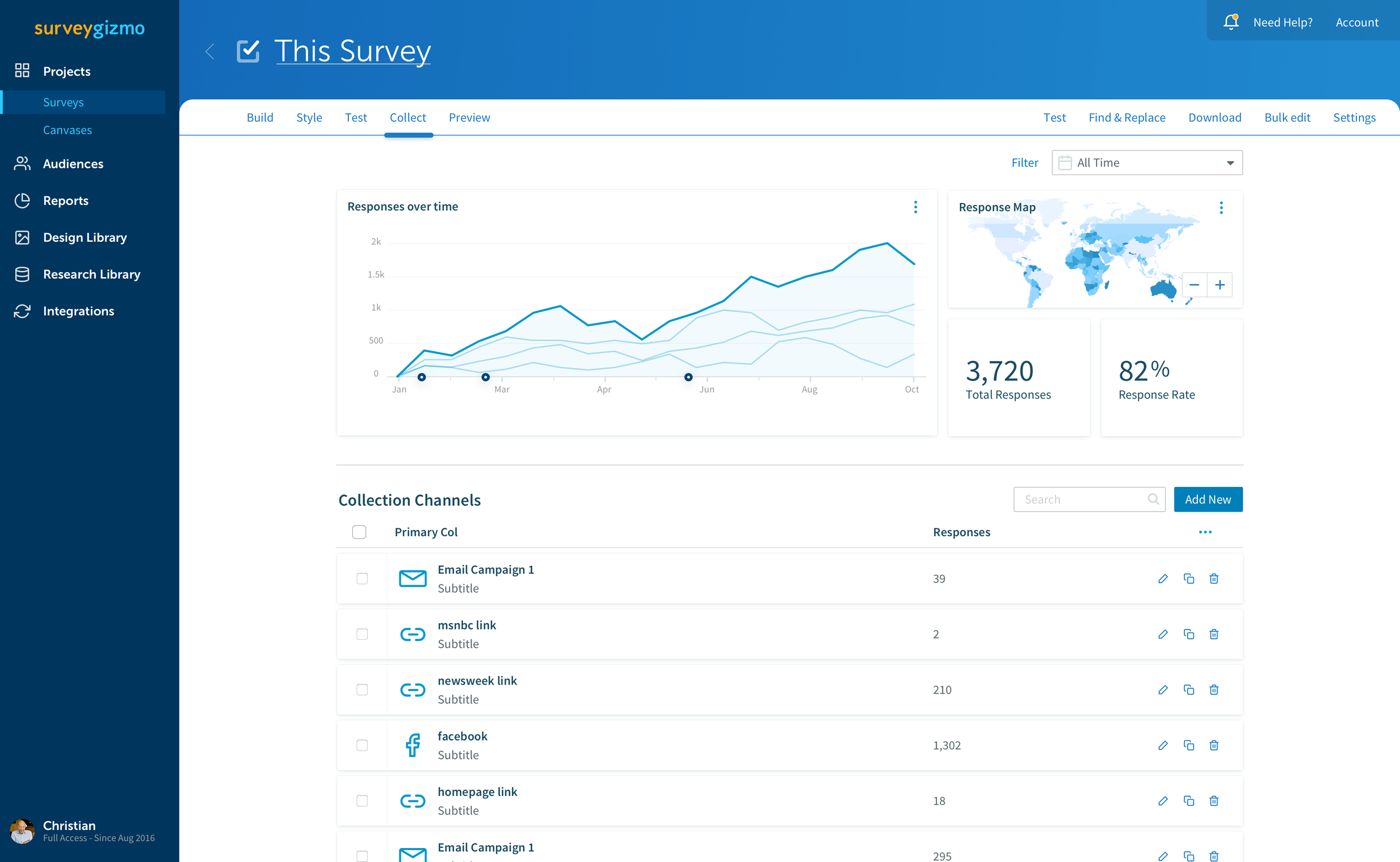
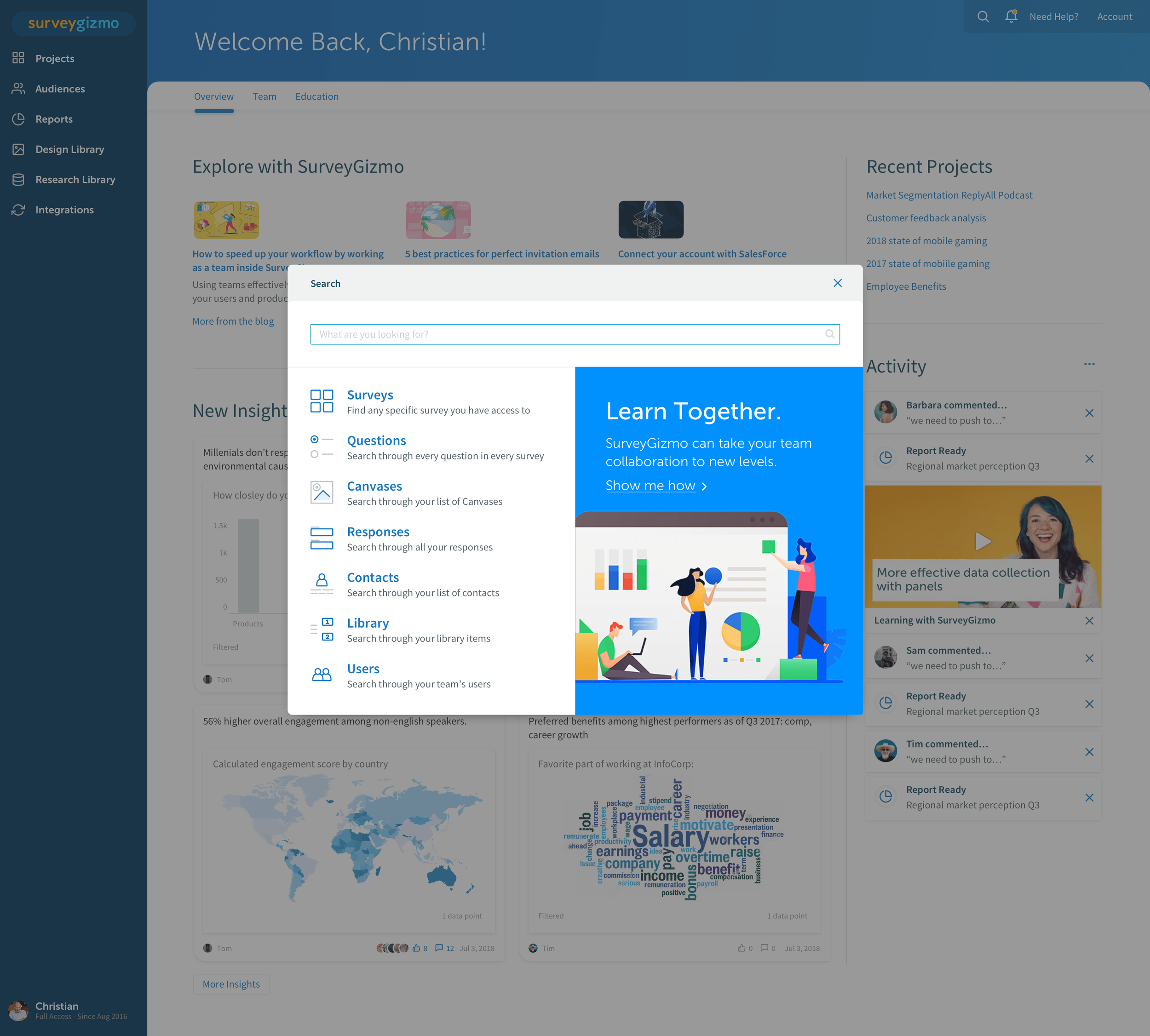
With leadership buy in, I built a new sitemap as if we were building SurveyGizmo today from the ground up. The design process also required a refresh on nearly every major component.